
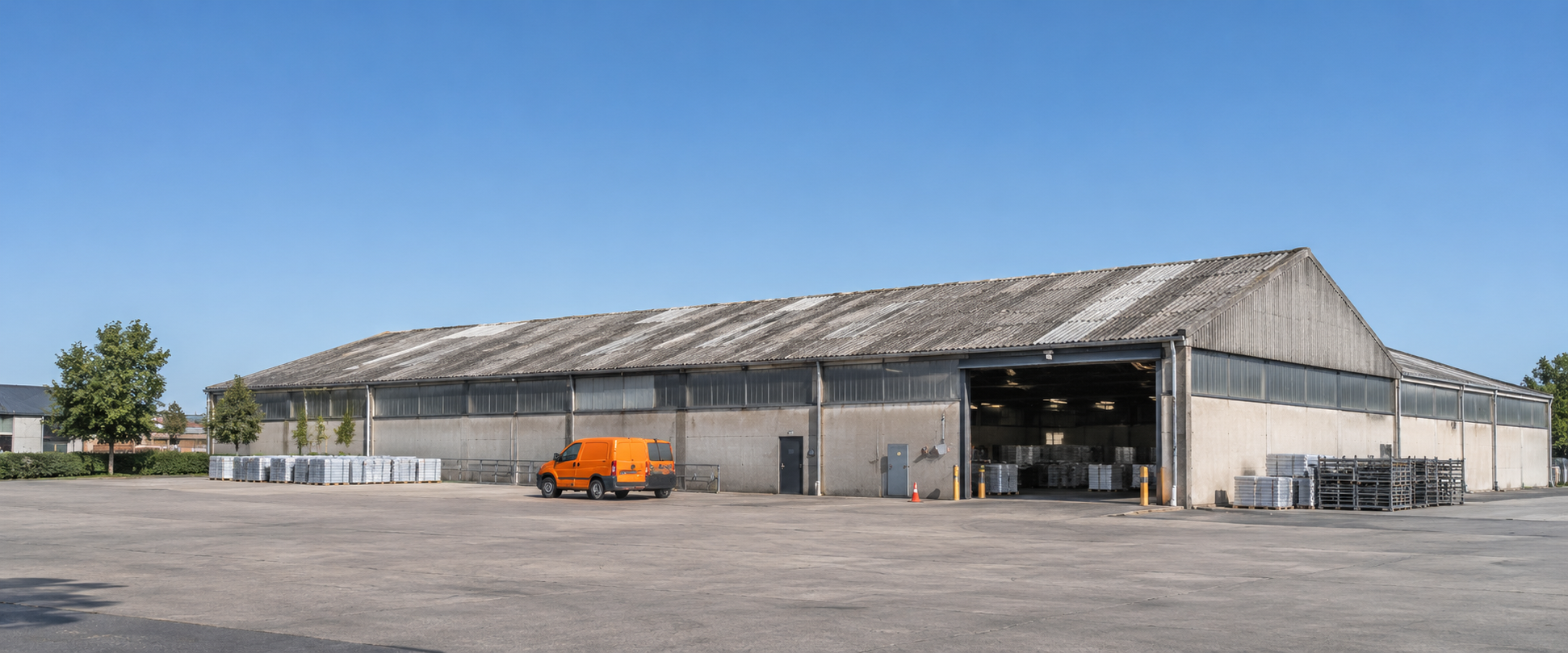
Identification and Inventory of Asbestos in Industrial Buildings and Roofs.
Before considering any removal, a company needs to know with certainty whether its facility, roof, or asset portfolio contains asbestos, and to have that information documented. Identification is the first mandatory step in the process: without a prior technical assessment, it is not possible to draft a work plan, apply for permits, or access available financial assistance. The current regulatory framework requires this identification as a prerequisite for any work involving asbestos-containing materials.
What does the service include?
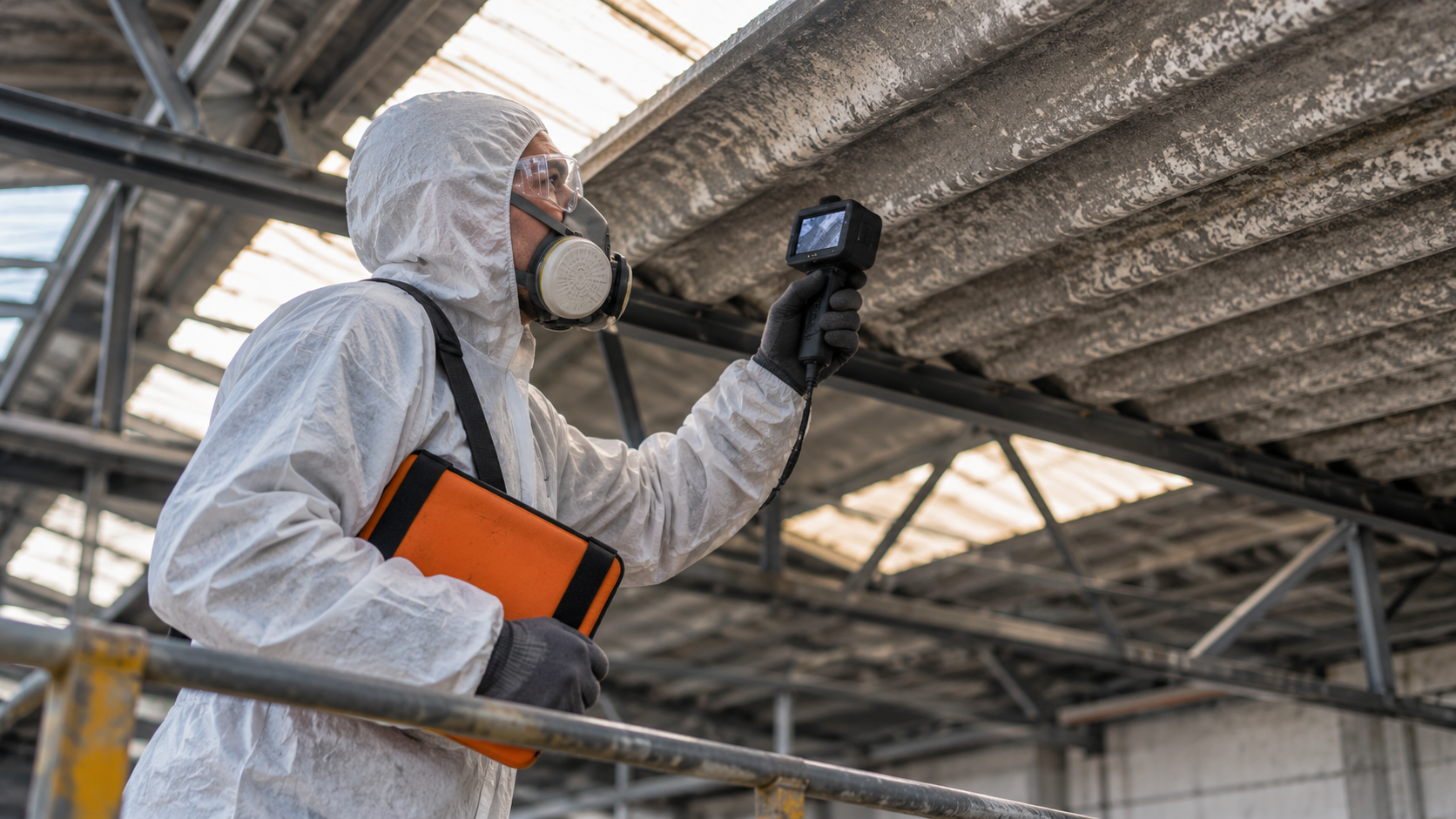
ROSCAF technical inspection of fiber-cement roofs and facades, conducted on-site by specialized technicians.
Preparation of the AID (Asbestos Identification Report), the document that officially certifies the presence, condition, and location of the detected asbestos.
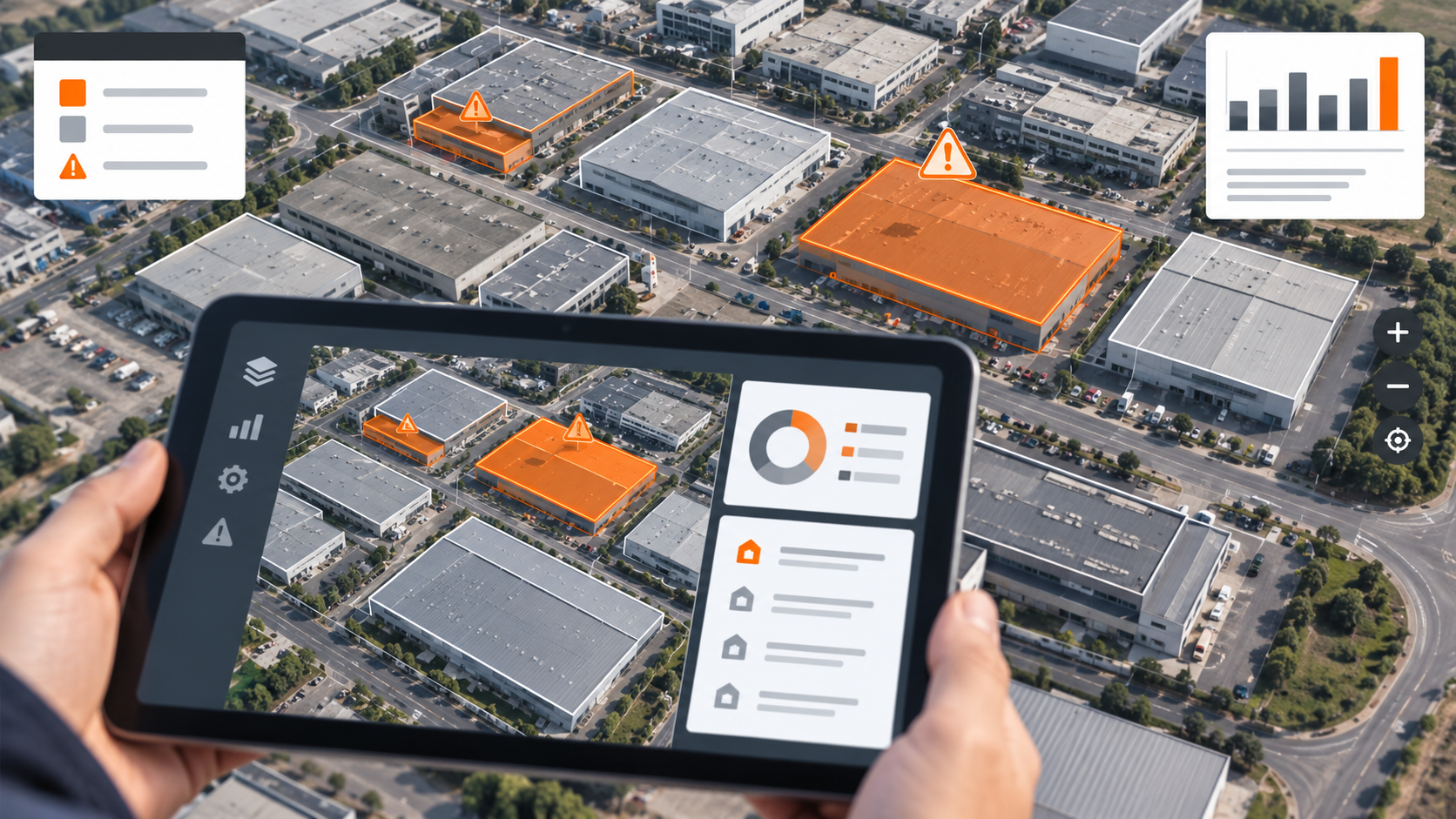
Geospatial mapping using QGIS for companies or government agencies with multiple assets (facilities, rooftops, or parcels), which allows them to visualize and prioritize interventions across an entire portfolio rather than on an asset-by-asset basis.
Who is this service for?
Designed for owners of industrial or agricultural buildings who do not know—or do not have documentation confirming—whether their roofs contain asbestos; companies with multiple assets that need an overview before planning; city councils and government agencies that must conduct a building census; and buyers or sellers of an asset who need to know its status before a transaction.
How it works
The process begins with a technical visit to the facility or roof, where materials that may contain asbestos are inspected and, when necessary, samples are taken for analysis. Based on the results, an AID is prepared: a technical document that details the exact location, the type of material, its condition, and the associated risk level. If the assignment involves multiple assets, the results are also integrated into a geospatial map, which helps prioritize which interventions are most urgent.
What the customer receives
Upon completion, the client receives the complete AID and a documented, defensible position in the event of a potential labor inspection: proof that they have complied with the identification requirement, regardless of whether they decide to remove the asbestos immediately or plan to do so at a later date.
Applicable Regulatory Framework
This service complies with the requirements of Royal Decree 847/2026 and Law 7/2022. You can find details on both regulations, including direct links to the official texts, on our legislation page.
Frequently Asked Questions
How do I know if my building contains asbestos?
The only reliable method is an in-person technical inspection, such as the one included in this service. The age of the building or the type of roof may provide some clues, but only a documented assessment (the AID) is valid for official purposes.
What is AID, and what is it used for?
The AID (Asbestos Identification Report) is the document that certifies whether a building or roof contains asbestos, where it is located, and what condition it is in. It is the mandatory starting point for any subsequent work plan, whether it involves immediate removal or medium-term planning.
Is it mandatory to identify asbestos even if you don't plan to remove it yet?
Yes. The identification requirement is separate from the decision to remove the asbestos immediately. Having the AID in order is what allows you to demonstrate, during an inspection, that the condition of the asset is under control and properly documented.
Would you like to know if your building or asset portfolio contains asbestos?
Once asbestos has been identified, the next step is to decide how and when to take action