

Risk eliminated.
Peace restored.
Comprehensive Industrial Asbestos Management for Businesses
Comprehensive compliance management that protects the value of your assets by managing the entire process and, if the client prefers, also handling the removal.”
We turn regulatory requirements into administrative certainty through comprehensive management of the entire process: identification, planning, and certification of asbestos removal from industrial and agricultural assets in Catalonia, with the capacity to expand our services to other autonomous communities.
Asbestos in your assets is no longer just a matter of compliance: it is a factor that affects your liquidity, your access to financing, and your ability to install solar power. Every day you go without the necessary documentation is a bargaining chip you give up to the buyer, the bank, or the insurer.
How we resolve the asbestos issue in your infrastructure:
Diagnosis and Registration: technical identification of asbestos (AID file) and compliance with official record-keeping requirements.
Grant Engineering: We optimize financial viability by managing available public grants for asbestos removal.
Direct Management and Removal: As an RERA-certified company (reg. no. 04/AE/26), Asbex can handle the removal process directly or delegate it to the customer’s preferred company.
Liability Closure: Full traceability and closure records that are auditable by authorities and labor inspectors.
Beyond a one-time project, we guarantee its long-term fulfillment. The client decides how the removal will be carried out: they can choose to have us supervise the work of a third-party company certified by RERA, ensuring maximum technical neutrality, or entrust us with the entire process, including the physical removal.
Frequently Asked Questions
Is it mandatory to remove asbestos from my industrial building in Catalonia?
Yes. The management and, where applicable, the removal of asbestos-containing materials in industrial facilities is regulated by state occupational safety and health regulations regarding asbestos—until October 23, 2026, by Royal Decree 396/2006; thereafter, Royal Decree 847/2026, which replaces it—and by Law 7/2022 on Waste and Contaminated Soil, which requires asbestos to be removed as hazardous waste prior to any demolition and mandates that municipalities conduct a census of facilities containing asbestos within their jurisdiction and establish a removal schedule. For private facilities such as industrial buildings, there is no single, generic deadline: the timeline depends on the municipal inventory, the condition of the material, and the activity carried out at the site. The Catalan Plan for the Eradication of Asbestos (2023–2032) complements this framework with a strategic roadmap specific to Catalonia and support measures such as grants from the ARC (Catalan Waste Agency), but it is not, in and of itself, the regulation that imposes the obligation. In all cases, encapsulation is permitted only as a temporary measure, never as a permanent solution.
What is the deadline for removing asbestos from my business?
Deadlines vary depending on the type of asset and its ownership status, and are governed by current Catalan and national regulations. The most important thing is not to memorize a generic deadline, but to have a specific assessment of your situation, because the actual deadline may be brought forward by other factors: a sale, an inspection, a financing application, or a modernization project.
How much does it cost to remove asbestos from an industrial roof?
The cost depends on the surface area, the condition of the material, and the difficulty of access, but a significant portion of the gross market cost can be reduced through properly managed public subsidies. Without such management, most companies either pay more than necessary or miss the application deadline.
Can I install solar panels if I have asbestos on my roof?
In practice, this cannot be done without first resolving the asbestos issue. The installation of a photovoltaic system on fiber-cement roofing that has not been removed is often held up during the permitting phase; therefore, asbestos removal must be planned as the first step in the energy project, not as a separate process.
What happens if I sell or rent a warehouse containing undeclared asbestos?
An unresolved legal and financial risk is passed on to the other party, which, in most current transactions, identifies it during due diligence and uses it as leverage to drive down the price—if not as a reason to block the transaction outright.
Why Act Now, Rather Than When It's Too Late
Managing risks associated with asbestos is not a one-time task, but rather a process that requires constant technical and legal monitoring. Every industrial asset containing asbestos-cement is subject to risks: administrative penalties, operational difficulties or delays, the suspension of modernization projects, and a loss of value in any sale, lease, or refinancing transaction.
At ASBEX, we turn that uncertainty into a work plan with deadlines, designated personnel, and auditable documentation for each phase. We are certified and authorized as a RERA-compliant company, and we manage your project comprehensively: we can handle the removal ourselves (coordinating, when necessary, with approved partner companies), or we can supervise and audit the removal carried out by the client’s preferred company. In both cases, we guarantee regulatory compliance and complete document traceability. The result for our client is the removal of industrial asbestos, the elimination of risks, and compliance with the regulatory requirements of their autonomous community.
How Your Company Benefits from Choosing ASBEX
Dealing with asbestos isn't just about avoiding a fine. It's about regaining control over decisions that, as long as the property's compliance status remains unresolved, are left in the hands of third parties: the buyer who negotiates a lower price, the bank that sets conditions for financing, the insurance company that reviews the policy, or the government agency that withholds a permit.
When a company brings its affairs into compliance through a comprehensive and defensible process, it regains room to maneuver on several fronts at once:
Liquidity and Financing
An asset containing undocumented asbestos has a reduced market value and faces difficulties in obtaining bank financing or refinancing. An identification report and an approved removal plan change the conversation with any financial institution or potential buyer.
Access to the Energy Transition
Many projects involving photovoltaic panels on industrial roofs are stalled due to the presence of unregulated asbestos-cement. Addressing the asbestos issue is not a separate process from the energy retrofit of your plant: in practice, it is a mandatory prerequisite.
Reduction in actual cost
A large portion of the withdrawal cost can be offset through public aid programs (such as those offered by the ARC), but only if the application is processed correctly and submitted by the deadline for the current call for applications.
Long-lasting legal protection
A manager’s or owner’s liability in the event of a labor inspection does not disappear simply because the material has been removed; what is required is an auditable record to prove it. That is the difference between “we’ve removed the asbestos” and “we’re in compliance.”
Internal processing time
Most industrial companies, cooperatives, and asset managers do not have a department capable of interpreting asbestos regulations, coordinating with government agencies, and validating grants all at the same time. Outsourcing this burden frees up the internal team to focus on its core business.
In short: it's not just about complying with Catalonia's regulations, but about turning a regulatory obligation into an operational advantage over competitors who haven't yet taken action.
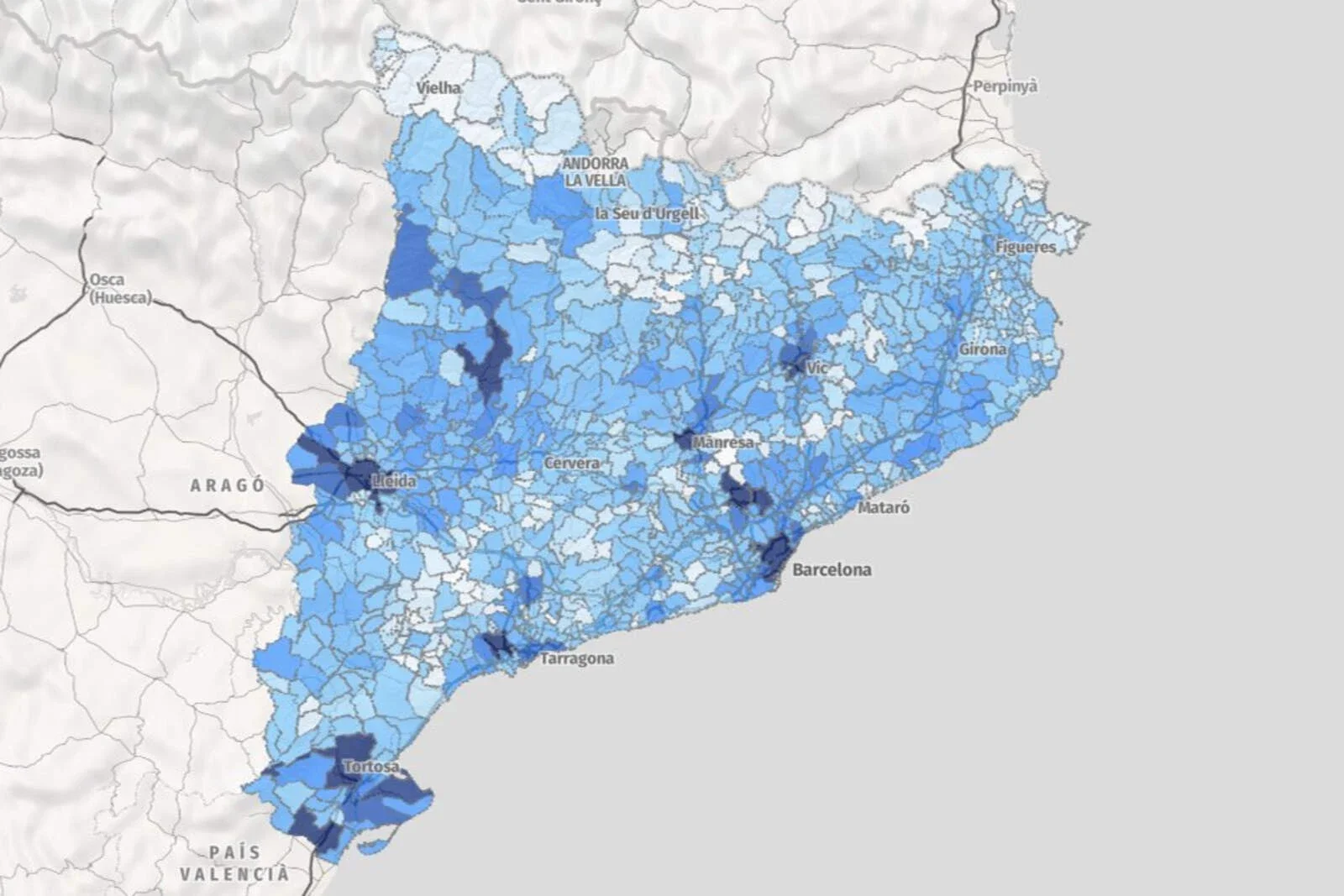
Asbestos in Catalonia.
What remains to be done.